Pages

Showing posts with label Space. Show all posts

Stunning pictures of Earth at night

Thursday, 6 December 2012

Stunning pictures of Earth at night
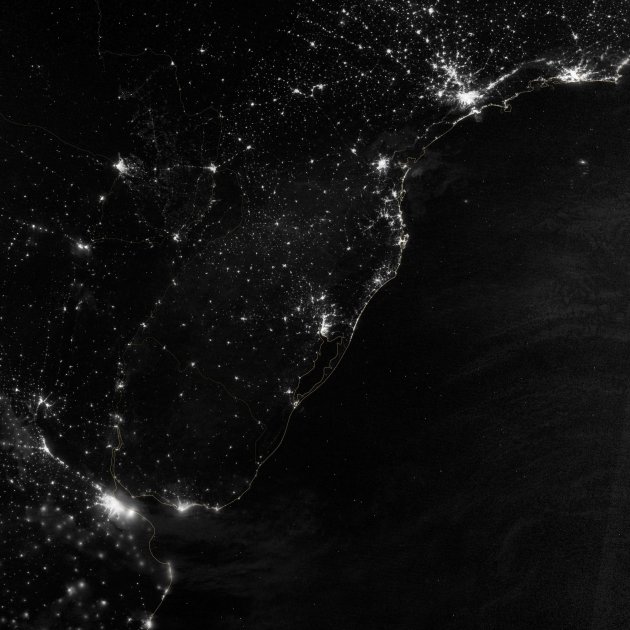
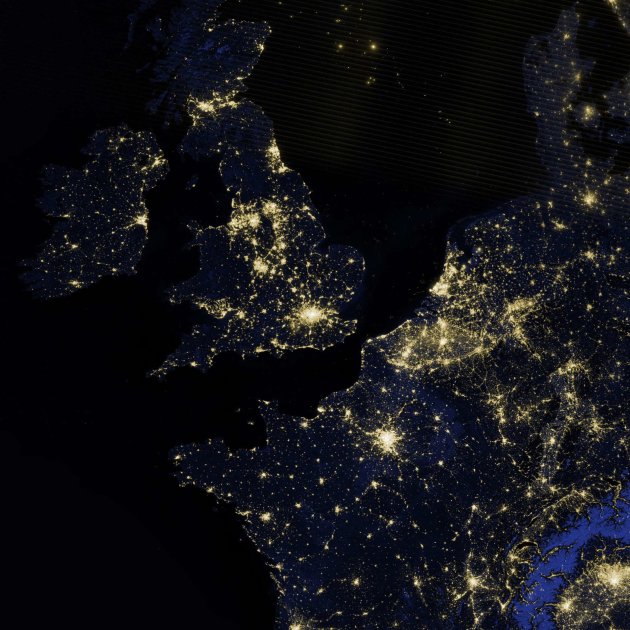
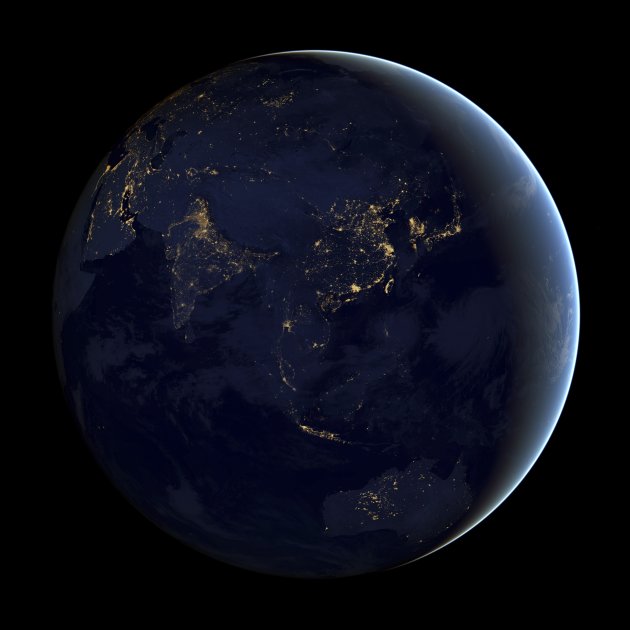
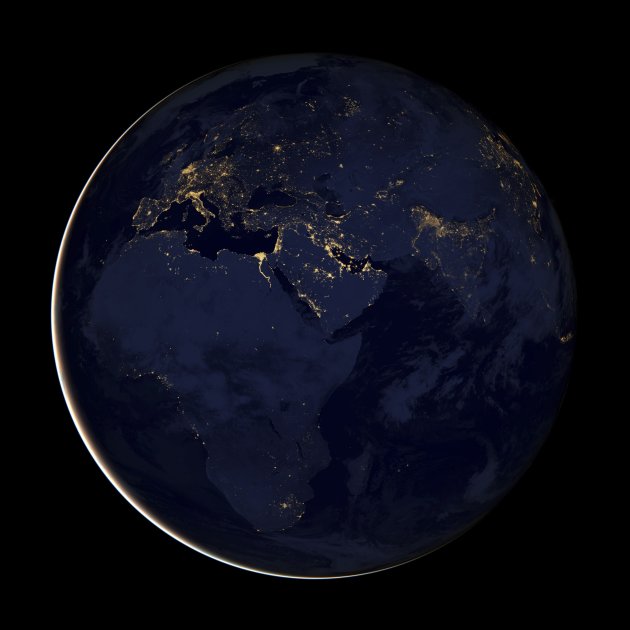
Almost 40 years to the day after the Apollo 17 crew snapped the famed "blue marble" image of Earth floating in space on December 7, 1972, NASA unveiled an unprecedented new look at our planet at night. A global composite image, constructed using cloud-free night images from a new NASA and National Oceanic and Atmospheric Administration satellite, shows the glow of natural and human-built phenomena across the planet in greater detail than ever before. The cloud-free pictures, taken with a high-resolution visible and infrared imager aboard a NASA and National Oceanic and Atmospheric Administration satellite, capture the night lights of Earth in unprecedented detail. The so-called day-night band of the Visible Infrared Imaging Radiometer Suite, or VIIRS.

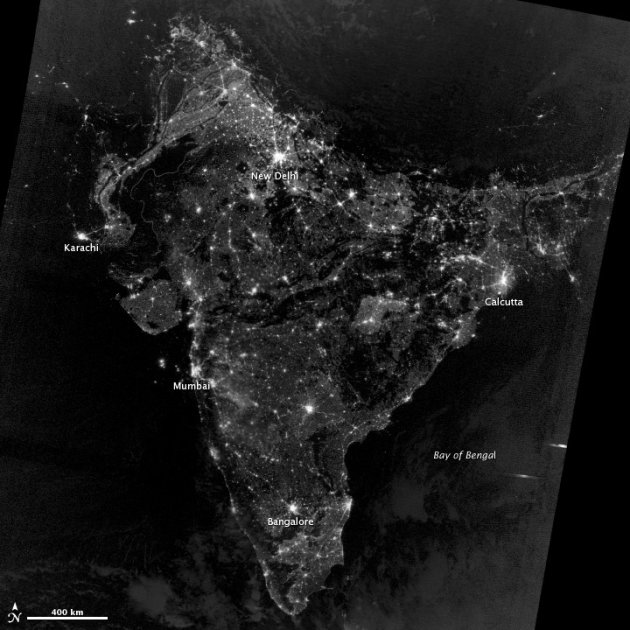
On November 12, 2012, the Visible Infrared Imaging Radiometer Suite (VIIRS) on the Suomi NPP satellite captured this nighttime view of southern Asia. The image is based on data collected by the VIIRS “day-night band,” which detects light in a range of wavelengths from green to near-infrared. The image has been brightened to make the city lights easier to distinguish.
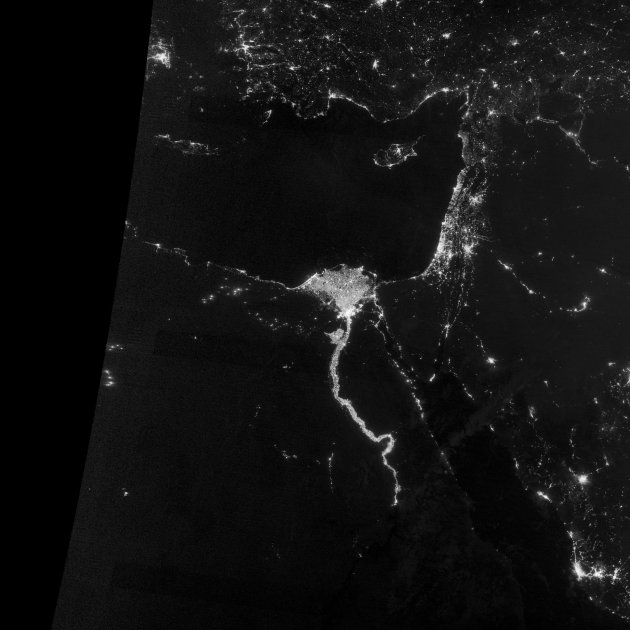
A NASA Earth Observatory image shows the area near the Nile River valley and Delta on the night of October 13, 2012
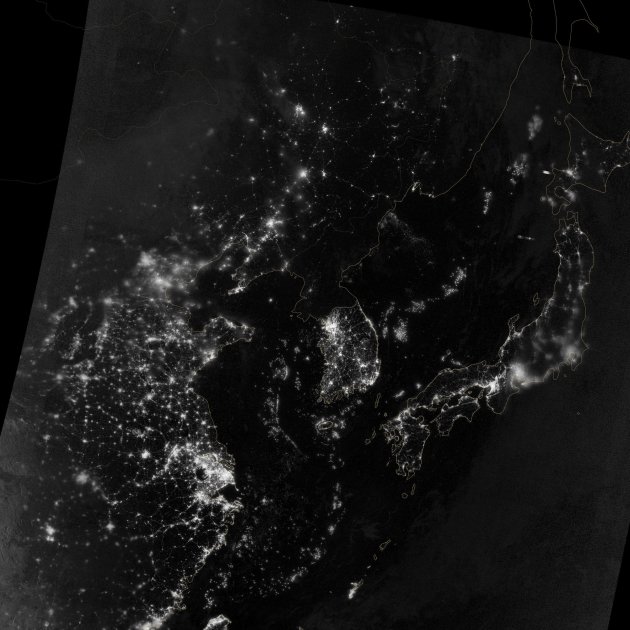
A NASA Earth Observatory image shows the area near Korean Peninsula on the night of September 24, 2012 A NASA Earth Observatory image shows part of the Atlantic coast of South America on the night of June 20, 2012A NASA Earth Observatory image shows Britain, Ireland and part of Western Europe as it appeared on the night of March 27, 2012A NASA Earth Observatory image shows the area near the Nile River valley and Delta on the night of October 13, 2012A NASA Earth Observatory handout of a composite image of Asia and Australia at night, assembled from data acquired by the Suomi NPP satellite in April and October 2012NASA Earth Observatory handout of a composite image of Europe, Africa, and the Middle East at night, assembled from data acquired by the Suomi NPP satellite in April and October 2012

The Most Expensive Object Ever Constructed - International Space Station

Tuesday, 7 September 2010

The Most Expensive Object Ever Constructed - International Space Station

The International Space Station (ISS) is an internationally developed research facility, which is being assembled in low Earth orbit. On-orbit construction of the station began in 1998 and is scheduled for completion by 2011. The station will remain in operation until at least 2015. With a greater mass than that of any previous space station, the ISS can be seen from the Earth with the naked eye, and, as of 2010[update], is the largest artificial satellite orbiting the Earth. The ISS serves as a research laboratory that has a microgravity environment in which crews conduct experiments in biology, human biology, physics, astronomy and meteorology. The station has a unique environment for the testing of the spacecraft systems that will be required for missions to the Moon and Mars. The ISS is operated by Expedition crews, and has been continuously staffed since 2 November 2000—an uninterrupted human presence in space for the past 9 years and 75 days. As of 1 December 2009, the crew of Expedition 22 is aboard.

The ISS is a synthesis of several space station projects that includes the American Freedom, the Soviet/Russian Mir-2, the European Columbus and the Japanese Kibō. Budget constraints led to the merger of these projects into a single multi-national programme. The ISS project began in 1994 with the Shuttle-Mir programme, and the first module of the station, Zarya, was launched in 1998 by Russia. Assembly continues, as pressurised modules, external trusses and other components are launched by American space shuttles, Russian Proton rockets and Russian Soyuz rockets. As of November 2009[update], the station consisted of 11 pressurised modules and an extensive integrated truss structure (ITS). Power is provided by 16 solar arrays mounted on the external truss, in addition to four smaller arrays on the Russian modules. The station is maintained at an orbit between 278 km (173 mi) and 460 km (286 mi) altitude, and travels at an average speed of 27,724 km (17,227 mi) per hour, completing 15.7 orbits per day.

Operated as a joint project between the five participant space agencies, the station's sections are controlled by mission control centres on the ground operated by the American National Aeronautics and Space Administration (NASA), the Russian Federal Space Agency (RKA), the Japan Aerospace Exploration Agency (JAXA), the Canadian Space Agency (CSA), and the European Space Agency (ESA). The ownership and use of the space station is established in intergovernmental treaties and agreements that allow the Russian Federation to retain full ownership of its own modules, with the remainder of the station allocated between the other international partners. The station is serviced by Soyuz spacecraft, Progress spacecraft, space shuttles, the Automated Transfer Vehicle and the H-II Transfer Vehicle, and has been visited by astronauts and cosmonauts from 15 different nations. The cost of the station has been estimated by ESA as €100 billion over 30 years, and, although estimates range from 35 billion dollars to 160 billion dollars, the ISS is believed to be the most expensive object ever constructed. The financing, research capabilities and technical design of the ISS programme have been criticised because of the high cost.

Photos by a fleet of GeoEye satellites

Monday, 6 September 2010

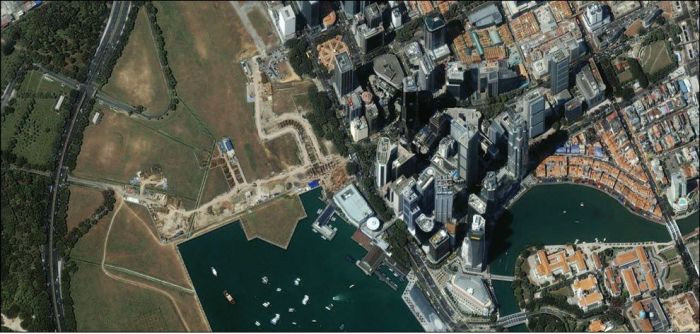
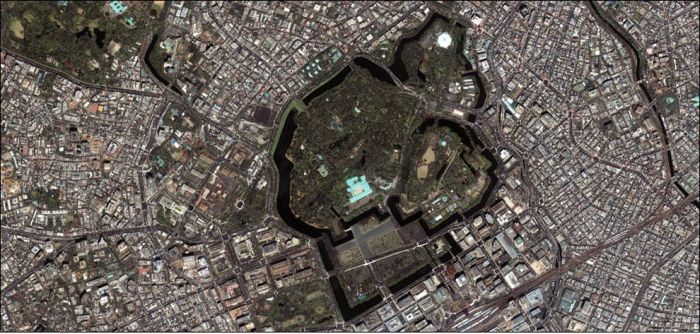
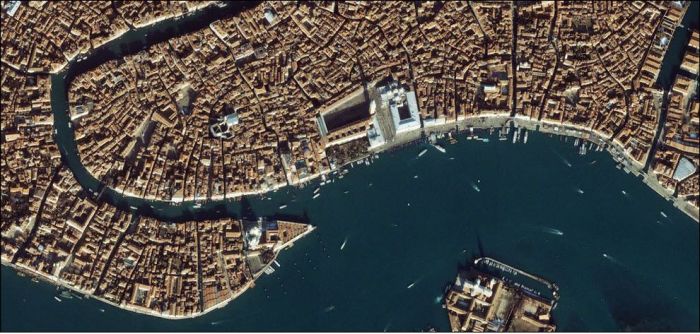
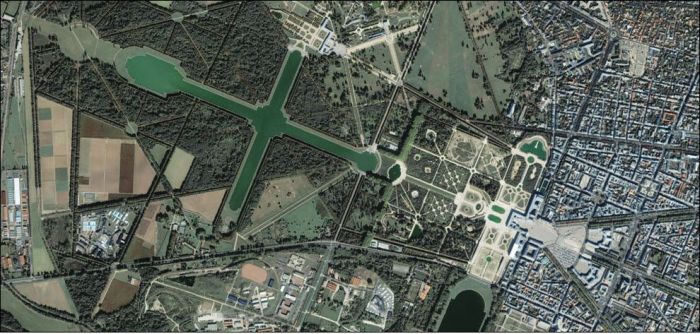
Here’s a collection of some cities that were captured on photos by a fleet of GeoEye satellites. There is Venice, Versailles, Beijing, and many others. Well, see for yourself :)
1. Annapolis, USAWorld Cities Seen From Above (22 pics)
2. Athens, Greece
World Cities Seen From Above (22 pics)
3. Boston, USA
World Cities Seen From Above (22 pics)
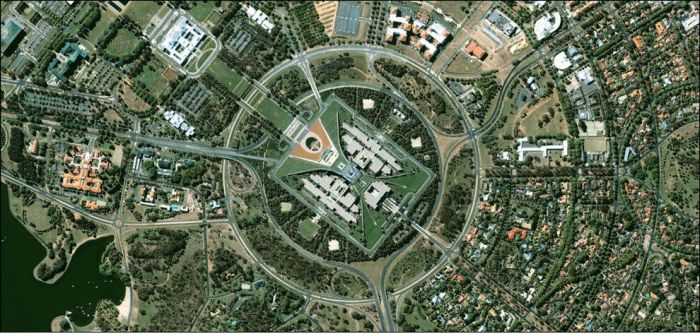
4. Canberra, Australia
World Cities Seen From Above (22 pics)
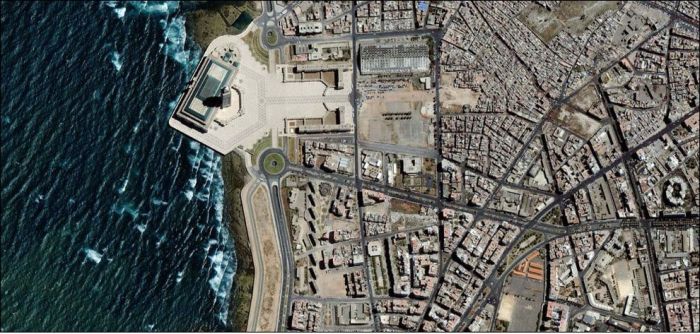
5. Casablanca, Morocco
World Cities Seen From Above (22 pics)
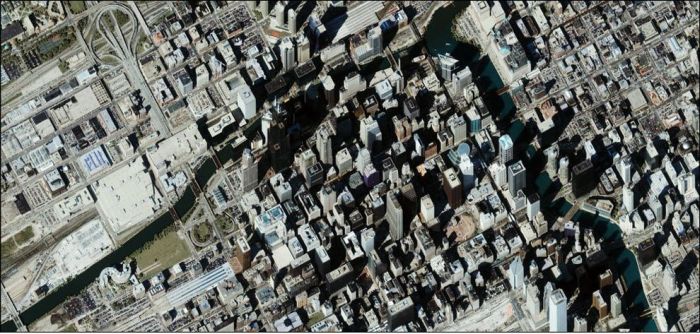
6. Chicago, USA
World Cities Seen From Above (22 pics)
7. Denver, USA
World Cities Seen From Above (22 pics)
8. Forbidden City, Beijing, China
World Cities Seen From Above (22 pics)
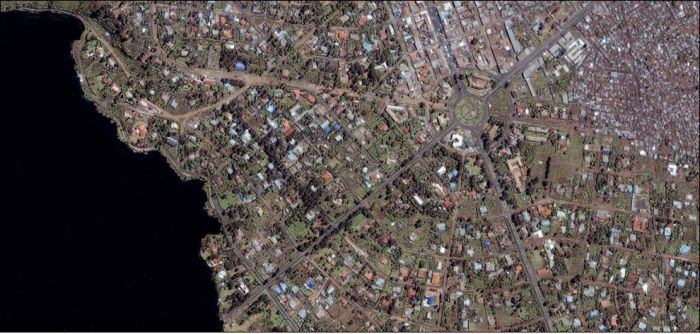
9. Goma, Congo
World Cities Seen From Above (22 pics)
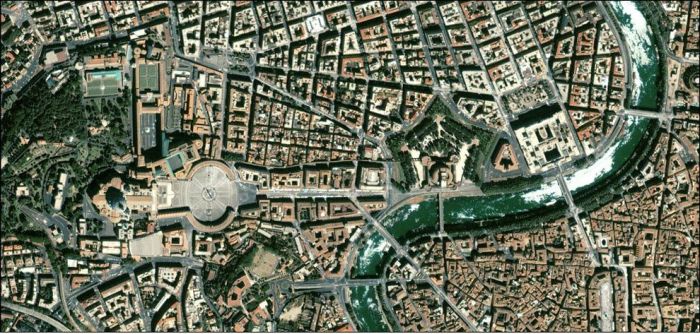
10. Vatican City, Italy
World Cities Seen From Above (22 pics)
11. Hong Kong, China
World Cities Seen From Above (22 pics)
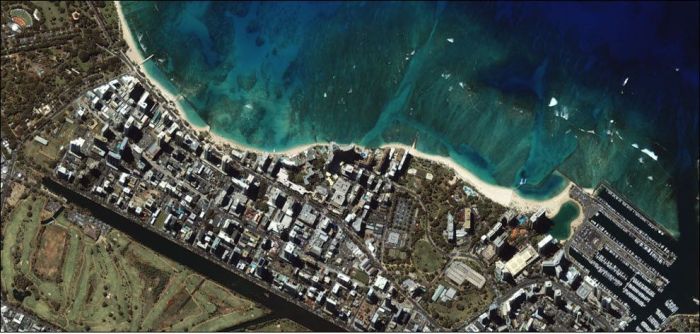
12. Honolulu, USA
World Cities Seen From Above (22 pics)
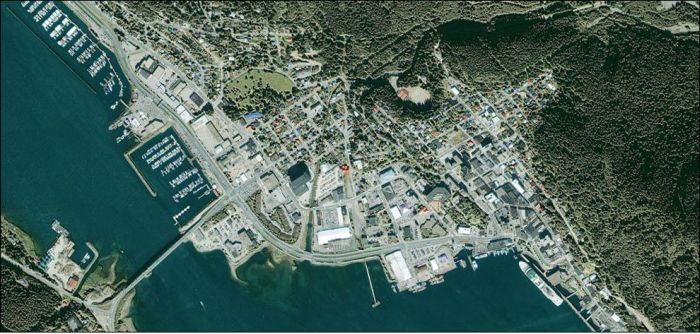
13. Juneau, USA
World Cities Seen From Above (22 pics)
14- 15 Las Vegas, USA
World Cities Seen From Above (22 pics)
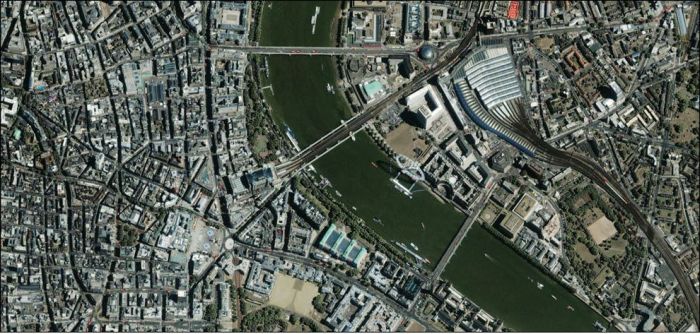
16. London, England
World Cities Seen From Above (22 pics)
17. Singapore, Singapore
World Cities Seen From Above (22 pics)
18. The Pearl, Qatar
World Cities Seen From Above (22 pics)
19. Tokyo, Japan
World Cities Seen From Above (22 pics)
20. Venice, Italy
World Cities Seen From Above (22 pics)
21. Versailles, France
World Cities Seen From Above (22 pics)
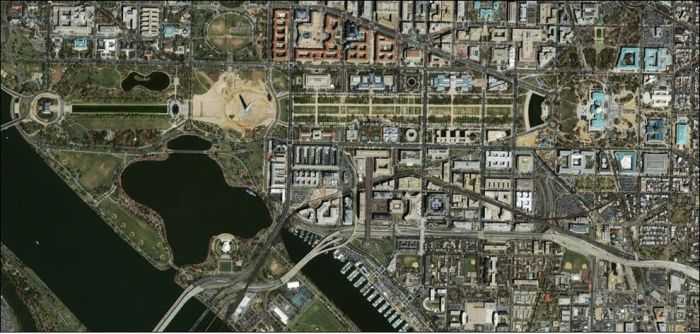
22. Washington, USA
World Cities Seen From Above (22 pics)

Mars is the fourth planet from the sun.

Mars is the fourth planet from the sun. The planet is one of Earth's "next-door neighbors" in space. Earth is the third planet from the sun, and Jupiter is the fifth. Like Earth, Jupiter, the sun, and the remainder of the solar system, Mars is about 4.6 billion years old.
Mars is named for the ancient Roman god of war. The Romans copied the Greeks in naming the planet for a war god; the Greeks called the planet Ares (AIR eez). The Romans and Greeks associated the planet with war because its color resembles the color of blood. Viewed from Earth, Mars is a bright reddish-orange. It owes its color to iron-rich minerals in its soil. This color is also similar to the color of rust, which is composed of iron and oxygen.